There are seasons of suffering that come through the ordinary hardships of life, and then there are wounds inflicted by the hands of another person. For women experiencing abuse—whether physical, emotional, verbal, sexual, spiritual, financial, or psychological—the pain is often compounded by confusion, fear, shame, isolation, and sometimes even the misuse of Scripture.
It is important to say clearly and without qualification:
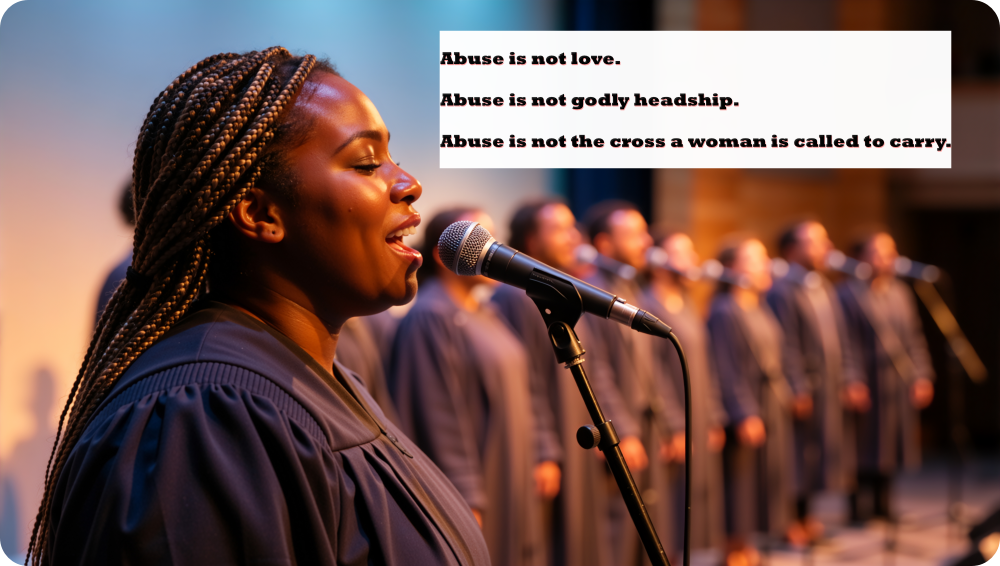
Abuse is not love.
Abuse is not godly headship.
Abuse is not God’s design for marriage or relationships.
Abuse is not the cross a woman is called to carry.
The Bible never commands a person to remain in danger so that another person can continue sinning against them. God’s heart consistently bends toward the vulnerable, the oppressed, the wounded, and those whose cries have been ignored by others.
Today’s devotional is for the woman who feels trapped, frightened, exhausted, unseen, or uncertain. It is for the woman who wonders if God sees what happens behind closed doors. It is for the woman who has been told that enduring abuse is somehow a measure of her faithfulness.
The Word of God says otherwise.
“The LORD is a refuge for the oppressed, a stronghold in times of trouble.”
— Psalm 9:9 (NLT)
Scripture Reading
For a fuller understanding of this theme, read Psalm 9, paying special attention to:
Psalm 9:7–10 (NLT)
“But the LORD reigns forever,
executing judgment from his throne.He will judge the world with justice
and rule the nations with fairness.The LORD is a shelter for the oppressed,
a refuge in times of trouble.Those who know your name trust in you,
for you, O LORD, do not abandon those who search for you.”
Psalm 10:17–18 (NLT)
“LORD, you know the hopes of the helpless.
Surely you will hear their cries and comfort them.You will bring justice to the orphans and the oppressed,
so mere people can no longer terrify them.”
Isaiah 61:1 (NLT)
“The Spirit of the Sovereign LORD is upon me, for the LORD has anointed me to bring good news to the poor. He has sent me to comfort the brokenhearted and to proclaim that captives will be released.”
Matthew 11:28 (NLT)
“Then Jesus said, ‘Come to me, all of you who are weary and carry heavy burdens, and I will give you rest.'”
Historical and Literary Context
Psalm 9 is traditionally attributed to David. Throughout David’s life, he experienced betrayal, threats, violence, and injustice. He knew what it felt like to be hunted, falsely accused, and endangered by those who possessed power.
The word translated “oppressed” refers to those who have been crushed, exploited, or treated unjustly by others. It is not describing a minor inconvenience. It speaks of people who have been harmed by the misuse of power.
This is significant because abuse is fundamentally about power and control. An abuser seeks to dominate another person through fear, manipulation, intimidation, violence, coercion, or humiliation.
When David writes that God is a refuge for the oppressed, he is declaring something profound about God’s character:
God does not stand with oppression.
God does not excuse oppression.
God does not bless oppression.
God is a refuge from oppression.
Throughout Scripture, God repeatedly reveals Himself as the defender of those harmed by the powerful. From the Israelites enslaved in Egypt to the widows, orphans, foreigners, and vulnerable people throughout Israel’s history, God consistently identifies Himself with those who are suffering injustice.
This theme reaches its fulfillment in Jesus Christ, who announced His mission as bringing freedom to captives and healing to the brokenhearted.
Reflection: The House with No Safe Room
Sarah sat quietly at the kitchen table after everyone had gone to bed.
The house was silent now.
Most people would have looked at her life and assumed everything was fine. The family attended church regularly. Her husband was respected in the community. He knew Scripture well. He volunteered. He smiled easily in public.
But no one saw what happened when the doors closed.
No one heard the criticism that slowly became her daily reality.
No one heard how every disagreement became her fault.
No one saw the way she had learned to measure every word before speaking.
No one knew how often she apologized for things she had not done.
No one knew that she lived in a constant state of anxiety, trying to prevent the next explosion.
At first she thought she was simply failing as a wife.
Then she thought perhaps she needed to pray more.
Then she wondered if God was using this suffering to teach her submission.
Years passed.
The insults became more severe.
The intimidation became more frightening.
The emotional wounds deepened.
Every attempt to express her pain was met with accusations, manipulation, or spiritual language twisted into a weapon.
She began to lose confidence in her own perceptions.
The abuse convinced her that reality itself could not be trusted.
One night after another painful confrontation, Sarah sat in her car outside a grocery store and cried.
Not dramatic sobs.
Just quiet tears.
The kind that come when someone has been carrying too much for too long.
She opened her Bible app almost absentmindedly.
Her eyes landed on Psalm 9:9.
“The LORD is a refuge for the oppressed.”
She read it again.
Then again.
Refuge.
The word would not leave her mind.
A refuge is not merely a place where suffering is explained.
A refuge is where suffering is interrupted.
A refuge is not where danger is justified.
A refuge is where protection is found.
For years Sarah had viewed God as someone asking her to endure.
But that evening she began seeing Him as someone offering shelter.
The difference changed everything.
She started noticing passages she had overlooked before.
God rescuing Israel from oppression.
God hearing Hagar’s cries in the wilderness.
God defending widows.
Jesus protecting vulnerable people.
Jesus confronting those who used power destructively.
Jesus restoring dignity to those society ignored.
A pattern emerged.
The God of Scripture was not indifferent to abuse.
He opposed it.
As months passed, Sarah began speaking with trusted people who understood abuse dynamics.
She learned that what she had experienced had a name.
She learned that accountability and repentance were not the same thing as excuses.
She learned that forgiveness did not require pretending harm never happened.
She learned that boundaries were not rebellion.
She learned that seeking safety was not sin.
Most importantly, she learned that God’s love was not measured by how much pain she could endure.
It was measured at the cross, where Christ willingly gave Himself for her.
The cross reveals sacrificial love.
Abuse reveals selfish domination.
The two are not the same.
Not even close.
The journey was not easy.
Healing rarely is.
Some days she felt strong.
Other days she felt overwhelmed.
There were moments when fear returned.
Moments when guilt resurfaced.
Moments when she questioned herself.
But each time she returned to the same truth:
“The LORD is a refuge for the oppressed.”
Not was.
Is.
Present tense.
A current reality.
A promise for today.
A promise for this moment.
A promise for every woman wondering whether God sees.
Because He does.
He sees every threat.
Every insult.
Every manipulation.
Every act of violence.
Every sleepless night.
Every anxious heartbeat.
Every hidden bruise.
Every tear shed in silence.
Every prayer whispered through trembling lips.
Nothing is hidden from Him.
One of the cruelest effects of abuse is that it convinces a person they are alone.
Yet Scripture repeatedly tells another story.
God saw Hagar when others overlooked her.
God heard Israel when they cried out in Egypt.
God noticed the widow gathering sticks.
God saw the woman bent over for eighteen years.
God heard blind Bartimaeus.
God remembered Noah.
God knew David’s suffering.
God sees you too.
Not as a case file.
Not as a problem.
Not as a burden.
As His beloved daughter.
And because He sees, He also acts.
Sometimes He acts through trusted friends.
Sometimes through counselors.
Sometimes through pastors who understand abuse.
Sometimes through advocates.
Sometimes through legal protection.
Sometimes through a church community that reflects Christ’s heart.
Sometimes through all of these together.
God’s refuge often arrives through practical means.
Throughout Scripture, God’s protection frequently comes through concrete actions, wise decisions, and courageous steps.
If you are experiencing abuse today, seeking safety is not a failure of faith.
It may be an expression of faith.
The God who is a refuge for the oppressed invites you not merely to survive but to come under His care.
He does not ask you to pretend evil is good.
He does not ask you to call abuse love.
He does not ask you to remain silent while being harmed.
He invites you into truth.
And truth is where healing begins.
Reflection Questions
1. Have you ever confused enduring abuse with carrying your cross for Christ?
What Scriptures have influenced that belief, and how do passages like Psalm 9:9 challenge it?
2. What would it mean for you to view God as a refuge rather than merely a witness to your suffering?
How might that change the way you pray or seek help?
3. Are there trusted people God may be inviting you to reach out to for support, protection, wisdom, or accountability?
4. What lies has abuse caused you to believe about yourself?
How does God’s Word speak a different truth?
5. Which aspect of God’s character brings you the most comfort today: His protection, His justice, His compassion, His presence, or His faithfulness?
Application
If you are currently experiencing abuse:
- Know that abuse is never justified.
- Prioritize your safety and the safety of any children involved.
- Reach out to trusted, trained individuals who understand abuse dynamics.
- Document incidents when safe to do so.
- Seek professional support from counselors, advocates, or domestic violence resources.
- Remember that asking for help is not a sign of spiritual weakness.
- Continue bringing your fears and pain honestly before God.
If you are supporting someone experiencing abuse:
- Listen without judgment.
- Believe them.
- Avoid pressuring them into quick decisions.
- Help them connect with qualified resources.
- Remind them of God’s love and dignity without minimizing their pain.
Prayer
Father,
You are the refuge of the oppressed and the defender of the vulnerable. You see every woman carrying wounds that others cannot see. You know every fear, every tear, every sleepless night, and every cry that has gone unheard by others.
For the woman reading this today, surround her with Your presence. Remind her that she is Your beloved daughter. Silence every lie that tells her she deserves abuse, that she must remain silent, or that her suffering is insignificant.
Give her wisdom to discern truth from manipulation. Give her courage to seek safety where safety is needed. Bring trustworthy people into her life who will reflect Your compassion, protection, and justice.
Heal the wounds that run deep within her heart. Restore what fear has stolen. Rebuild what has been broken. Strengthen what has become weary.
Lord Jesus, You came to heal the brokenhearted and proclaim freedom for captives. Let that freedom become reality for every woman living under oppression today.
May she know that You see her, You love her, You are with her, and You will never abandon her.
In Jesus’ name,
Amen.
Further Scripture for Study
- Psalm 34:17–18
- Psalm 82:3–4
- Isaiah 43:1–2
- Isaiah 61:1–4
- Matthew 11:28–30
- Luke 4:18–19
- Romans 8:38–39
- 2 Corinthians 1:3–4
- James 1:27
- Revelation 21:4