There was nothing unusual about Aunt Renee sitting in that hospital waiting room.
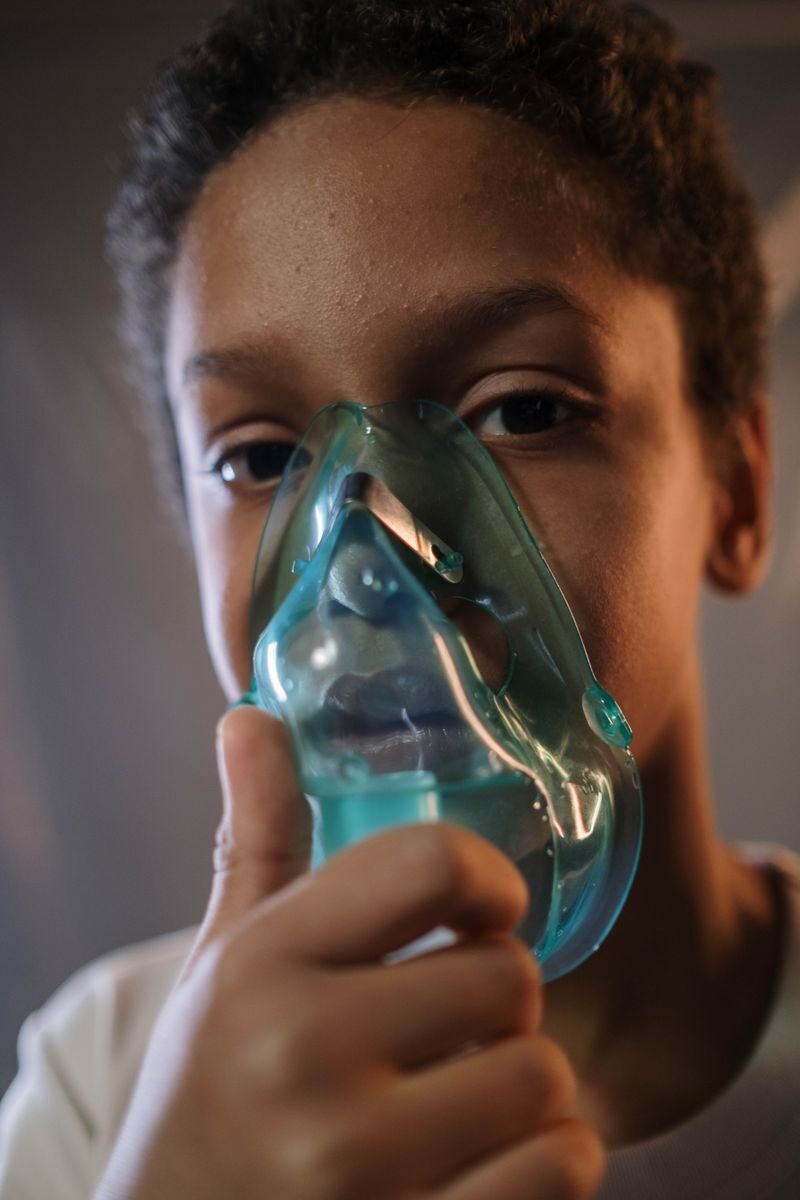
Families had been doing this forever. Somebody goes back for a procedure, everybody else waits, worries, checks the clock and tries not to worry some more.
Her sixteen-year-old nephew Micah had gone under anesthesia for a medical procedure. Everything had gone well. Before long, his parents were allowed to be with him as he began waking in recovery.
Then something happened nobody expected.
Micah started fighting.
Not arguing. Not giving anybody teenage attitude. His body was twisting and pushing against the people trying to keep him safe. When his father moved toward him, Micah fought against him too.
His daddy’s face changed.
This was his son.
He knew this boy.
Micah had never raised a hand to him.
His mother tried what mothers have tried since there have been frightened children in this world. She came close. She softened her voice. She called his name the way only she called his name.
Baby. Mama’s right here.
But even that didn’t seem to reach him.
For a moment, you could see the hurt cross her face.
Then the doctor spoke.
She explained that some young people can become extremely confused and agitated while emerging from anesthesia. They can thrash, push, kick, cry, resist people trying to help them or appear to fight. A child can look awake while still being profoundly disoriented.
Micah wasn’t necessarily looking at his father and deciding to fight his father.
He wasn’t necessarily rejecting his mother’s comfort.
His body was awake enough to defend itself before his mind was awake enough to understand that he was safe.
His parents looked at each other.
Oh.
That little word can hold a whole education.
They stopped trying to interpret the moment through the son they knew. They let the medical team do what they knew how to do. They stayed near him and waited.
Eventually, Micah came back.
His eyes settled. His parents became familiar again. The strange room became a room. Hands trying to protect him stopped feeling like something he needed to escape.
His parents thanked the doctor.
She had given them medical information, yes.
But she had also given that family grace.
She had stopped loving people from drawing the wrong conclusion about a child.
And church family, I believe there is something in that hospital room for us.
We Can Love Children and Still Misread Them
Some of us grew up around people who loved children fiercely.
They fed children who weren’t theirs. Bought somebody else’s child an Easter outfit. Sent plates home after church. Put money in a young person’s hand before they left for college and said, “Don’t tell everybody I gave you that.”
That kind of love is real.
But love does not make us all-knowing.
Good people can misunderstand children.
Christian people can misunderstand children.
Parents can misunderstand their own children.
And sometimes the language available to us makes misunderstanding worse.
We see a child who won’t sit still and call him disobedient.
We see a teenager who has gone quiet and call her disrespectful.
We see a child who becomes angry quickly and decide somebody needs to straighten him out.
We see the girl who doesn’t want to hug relatives and say she needs to stop acting funny.
We see a child sleeping through Sunday school and assume somebody let that child stay up half the night playing games.
Sometimes we might even reach for spiritual language.
Rebellious.
Hardheaded.
Needs more prayer.
Needs discipline.
And sometimes, yes, a child needs correction.
The Bible does not ask us to pretend wrongdoing is righteousness.
But neither does Scripture give adults permission to pronounce judgment before seeking understanding.
“The heart of the righteous studieth to answer.”
Proverbs 15:28 gives us a picture of somebody who does not have to react before thinking.
There is wisdom in that.
Behavior Tells Us Something Happened. It Doesn’t Always Tell Us Why.
A child falls asleep in church.
What do you see?
Maybe he was playing video games until three in the morning.
Or maybe his family is living somewhere temporary and he barely slept.
A girl keeps snacks hidden in her bag.
Maybe somebody calls her greedy.
Maybe there hasn’t always been enough food at home.
A teenager seems uninterested in plans for next year.
Maybe adults call him unmotivated.
Maybe he heard his mother crying over an eviction notice last night and cannot imagine next month, much less next year.
A child with a disability becomes overwhelmed by noise, touch, lights or expectations adults barely notice.
Someone sees misbehavior.
The child may be reaching the limit of what their body can tolerate.
A child who has experienced violence may react strongly to a raised voice, a slammed door, sudden movement or somebody blocking the doorway.
The adults in the room see an overreaction.
The child’s body may remember something the adults know nothing about.
This does not mean every difficult behavior is caused by abuse.
We must be careful there too.
It means we should know enough to know that we do not always know.
That is humility.
And humility belongs in the house of God.
Jesus Was Never Careless With the Vulnerable
There is a tenderness in the way Jesus dealt with people that I don’t ever want the church to outgrow.
He could see what other people couldn’t.
He noticed the person everybody else had learned not to notice.
He asked questions when other people had already reached conclusions.
And when His disciples tried to move children out of the way, Jesus corrected the adults.
“Suffer the little children to come unto me, and forbid them not.”
Mark 10:14.
I have sat with that Scripture differently as I’ve gotten older.
The children were not the problem in that passage.
The adults’ understanding of the children’s place was.
Jesus changed the adults.
There is a word in there for anybody entrusted with children.
Sometimes the child does not need to be the first person in the room corrected.
Sometimes God has something to teach us about how we are seeing the child.
Poverty Has Behaviors
So does fear.
So does hunger.
So does grief.
So does disability.
So does instability.
So does living in a home where you listen to grown people’s footsteps because footsteps tell you what kind of evening this is going to be.
Children experiencing hardship do not leave their nervous systems at the church door.
They bring them into Sunday school.
They bring them to children’s choir.
They bring them to Vacation Bible School.
They bring them to youth group.
They bring them to the fellowship hall.
And sometimes they bring them into the sanctuary wearing their very best clothes.
A child can look beautifully cared for on Sunday morning and still be frightened about Monday.
We cannot always see what children are carrying.
That should make us slower with labels.
Be Careful With Spiritual Explanations
The church has language powerful enough to heal people.
We also have language powerful enough to wound them.
That means we must handle it carefully.
Not every frightened child has a rebellious spirit.
Not every withdrawn child has a bad attitude.
Not every angry child is disrespectful.
Not every child who struggles to follow instructions needs somebody to “break that stubbornness.”
And we should be exceedingly careful about attaching frightening spiritual explanations to behaviors that may have medical, developmental, psychological, environmental or safety-related causes.
Prayer and understanding are not enemies.
Neither are faith and medicine.
Neither are discipline and compassion.
God gave us minds capable of learning.
When somebody knows something we don’t know, we can do exactly what Micah’s parents did in that recovery room.
Listen.Learn.Reset.
Thank them.
There is no shame in discovering that your first interpretation was wrong.
There is wisdom in being willing to change it.
Adults Have the Power to Give Children Names They Never Chose
This is where I want churches to be especially thoughtful.
Once adults begin describing a child a certain way, those descriptions travel.
You know how church families are.
“Pray for that little boy. He’s a handful.”
“That girl has always been difficult.”
“You know how he is.”
“She has an attitude.”
Soon people who have never had a meaningful conversation with that child believe they know something about who that child is.
A moment becomes a reputation.
A reputation becomes an expectation.
And the expectation begins meeting the child at the door.
Church ought to be one of the places where we resist doing that.
Because we serve a God who knows people beyond the worst thing somebody can say about them.
“The LORD seeth not as man seeth.”
That is 1 Samuel 16:7.
We usually remember the rest: man looks on the outward appearance, but the Lord looks on the heart.
Perhaps there is wisdom there for how we approach children’s behavior too.
We see what happened.
God knows everything that came before it.
We see the outburst.
God knows the fear.
We see the silence.
God knows what the child cannot say.
We see today’s behavior.
God sees the whole child.
Give Them the Grace of One More Question
Before saying, “What is wrong with this child?”
We may ask:
“What happened before this?”
“What does this child need?”
“Is something hurting?”
“Is this child frightened?”
“Could th
“Is there something this child has been trying to tell us?”is be related to a disability or medical condition?”
“Has something changed at home?”
“Does this child feel safe?”
Sometimes the answer will simply be that a child knowingly did something wrong.
Children need adults willing to say no. But correction does not require contempt. Accountability does not require humiliation.
And Christian discipline should never require us to stop being curious about the wellbeing of the child standing before us.
Remember Micah.
Everybody in that recovery room saw the same behavior.
His father saw a son trying to fight him.
His mother saw a child refusing her comfort.
The doctor saw a young person emerging from anesthesia whose brain had not yet made sense of the room around him.
Nobody loved Micah more than his parents did.
But in that moment, the person who understood what was happening gave love better information.
And love was humble enough to receive it.
That is beautiful to me.
Because sometimes grace is not overlooking what happened.
Sometimes grace is refusing to pretend we understand what happened before we do.
There are children walking into churches carrying poverty, disability, violence, abuse, grief, family instability and fears about tomorrow that they have never put into words.
May we never become so certain about their behavior that we stop wondering about their hearts.
May our churches be places where children are protected enough to tell the truth, loved enough to be corrected without being shamed, and known well enough that one difficult season does not become their name.
And when we don’t understand a child, may God give us the humility to learn before we label.
Because behavior is evidence.
It is not always an explanation.
And sometimes the most Christlike thing an adult can say about a struggling child is:
There may be something here I do not yet understand. Let me listen before I decide who this child is.