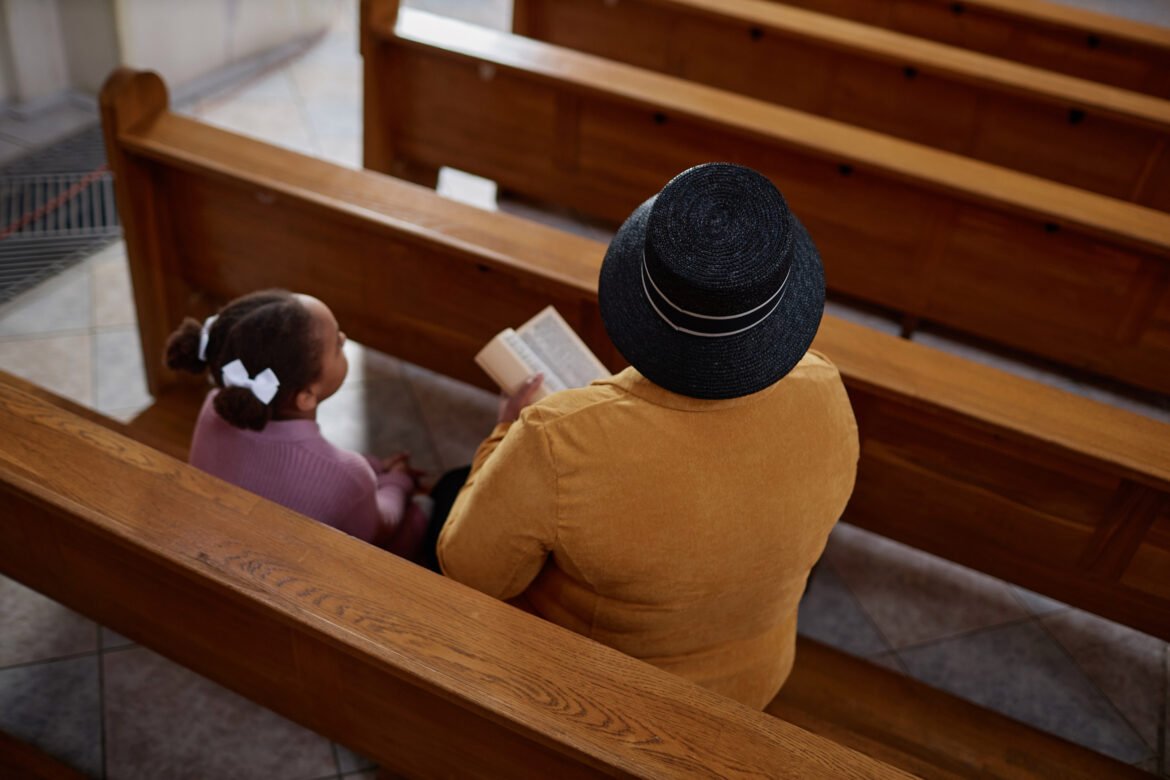
Protecting children at church is not distrust — it’s discipleship.
It is holy work.
It is the way we show — not just say — that our God is a protector, not a predator, and a healer, not a harm-maker.
When we put real safety in place, we are teaching our people — and our children — something deeper:
- honesty
- humility
- accountability
- courage
- the sacred worth of every body
Because when we protect children well, we are not “overreacting.”
We are reflecting the heart of the God we proclaim.
Scripture that grounds this truth
Honesty
We tell the truth, even when it means facing hard things.
“Speak the truth in love.”
Ephesians 4:15
Humility
We admit limits. We ask for help. We refuse to hide behind titles and tradition.
“God opposes the proud but gives grace to the humble.”
James 4:6
Accountability
We bring things into the light — because secrecy is where harm grows.
“Have nothing to do with the fruitless deeds of darkness, but rather expose them.”
Ephesians 5:11
Courage
We choose protection over reputation, and truth over comfort.
“Be strong and courageous… for the Lord your God is with you.”
Joshua 1:9
The sacred worth of every body
We remember every child is God’s handiwork — deserving dignity and care.
“I praise You, for I am fearfully and wonderfully made.”
Psalm 139:14
And we hold Jesus’ words close:
“Whoever welcomes one such child in my name welcomes me.”
Mark 9:37
And His warning:
“If anyone causes one of these little ones… to stumble…”
Matthew 18:6
This is why we build boundaries.
Not because we don’t trust people.
Because we trust God —
and God has always stood on the side of the vulnerable.
When we choose protection, we are practicing faith, not fear.
We are choosing love in public.
And that is what discipleship looks like.
1️⃣ Start with a clear theology of protection
Children are not “little helpers.”
They are not “learning submission.”
They are not there to serve adults’ needs.
They are children who deserve:
- safety
- dignity
- bodily autonomy
- protection from harm
A church that cannot say plainly:
“We protect children — even when it costs us comfort, reputation, or relationships,”
is already unsafe.
2️⃣ Zero tolerance — on paper and in practice
Every church needs a written Child Protection Policy that is:
publicly available
reviewed annually
enforced consistently (no exceptions for “important” people)
It should include:
✔ definitions of abuse (including grooming)
✔ mandatory reporting procedures
✔ consequences for policy violations
✔ support pathways for victims and families
✔ how to cooperate with law enforcement — not replace it
If your policy keeps everything “in-house,” that is not protection — it is concealment.
3️⃣ Screen — and then keep screening
Predators rely on easy entry.
Healthy churches require:
- background checks (re-run regularly)
- written applications
- reference checks
- interviews focused on boundaries and motivation
- probationary periods before contact with youth
And remember:
Background checks catch known offenders — not skillful groomers.
Screening is only one layer.
4️⃣ The “Two-Adult Rule”
No adult alone with a child. Ever.
Practically, that means:
- two unrelated adults in every classroom
- open doors or windows in rooms
- no private car rides
- no closed-door counseling with minors
- no one-on-one trips, retreats, or “mentoring” in private spaces
If a program cannot run safely, it does not run.
5️⃣ Understand grooming — and talk about it openly
Grooming rarely looks like violence at first.
It often looks like:
- extra attention
- special gifts
- private inside jokes
- secret texting / DMs
- isolating the youth from peers or family
- slow boundary pushing (“It’s just between us.”)
Teach leaders, parents, and youth what grooming is.
Normalize saying:
“That doesn’t feel appropriate.”
Kids should never feel responsible for “protecting” an adult’s reputation.
A note to leaders and parents
Protecting children at church is not distrust — it’s discipleship.
It teaches:
- honesty
- humility
- accountability
- courage
- the sacred worth of every body
When we protect children well, we reflect the character of the God we proclaim.
Gracious and protecting God,
We come to You as mothers, aunties, grandmothers, teachers, pastors, and friends —
women who know what it means to watch, to worry, and to guard the ones we love.
Thank You for every child You have placed in our care.
Thank You that You see them, know them, and cherish them even more than we do.
Lord, give us eyes to notice what others might ignore.
Give us courage to speak when silence would be easier.
Give us wisdom to build boundaries that protect, not control.
And give us hearts soft enough to love, but strong enough to say “no” when safety calls for it.
Where there has been harm, bring truth.
Where there has been silence, bring light.
Where there is fear, bring steady hope.
Heal every Survivor who walks into our sanctuaries carrying stories too heavy to name.
Make our churches places where children laugh freely, learn safely, and grow without fear —
places where Your love is not just preached, but practiced.
And Lord, remind us daily:
we do this not for applause,
not for image,
but because every child is Yours.
Keep us faithful.
Keep us humble.
Keep us brave.
In Jesus’ name,
Amen.